Staring at screens, chasing down bugs, and constantly interrupted by chat notifications—sound familiar? When your brain’s RAM hits nearly 100%, you might find yourself thinking, “I can’t process any more new ideas… I need to completely clear my brain’s cache.”
When that happens, I have a secret, off-the-beaten-path sanctuary in Sapporo where I always escape.
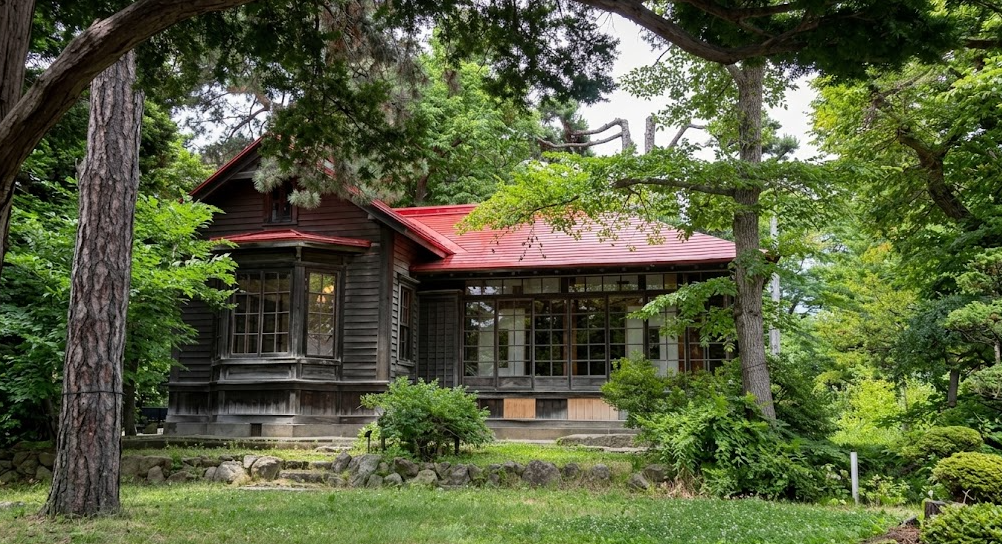
Just a short walk northwest of Sapporo Station, tucked away in North 7 West 7, lies Seikatei. Standing quietly in a peaceful corner far from the bustling crowds of Odori Park and the Clock Tower, this historic Meiji-era building is a true hidden gem.
In this post, we’ll dive deep into the architectural details of this historic pavilion and explore why it offers the ultimate digital detox experience—especially for busy developers and tech professionals.
1. A 9-Minute Walk from Sapporo Station: An Air Pocket Free from Urban Noise
Exit the North Gate of JR Sapporo Station, walk past Yodobashi Camera, and head west for about nine minutes. Located just south of Hokkaido University’s expansive campus, this spot is surrounded by quiet residences and offices, forming a peaceful urban sanctuary completely disconnected from the city’s hustle.
When thinking of historical architecture in Sapporo, famous landmarks like Hoheikan (the elegant historic hotel relocated to Nakajima Park) or the iconic Sapporo Clock Tower usually come to mind. However, Seikatei possesses a crucial advantage that sets it apart.
It still stands in the exact location where it was originally constructed over 140 years ago.
When Seikatei was built in 1880 (Meiji 13), this area was part of Kairakuen, Sapporo’s very first public park. It was blessed with rich, untouched nature, where fresh natural spring water bubbled up and wild salmon swam upstream in nearby rivers every autumn.
While many historical structures have been relocated for urban development or preservation, Seikatei remains on its original plot and orientation, quietly preserving the authentic atmosphere of the Meiji era. This “on-site local cache” vibe makes it feel like an exclusive, secret hideaway for those in the know.
2. Built in 1880: Appreciating the Trailblazing “Japanese-Western Integration”
Seikatei was originally built by the Kaitakushi (Hokkaido Development Commission) as a reception house to welcome distinguished guests from outside Hokkaido. In 1881, Emperor Meiji himself rested here during his official tour of Hokkaido.
The greatest charm of this building lies in its “Japanese-Western hybrid architecture,” achieving a harmonious blend of traditional Japanese and Western design under a single roof.
Exterior (UI): American Clapboard Siding and the Red Star Symbol
The exterior reflects Western architectural influences introduced from the United States at the time, featuring balloon-frame construction elements. The walls use weatherboard/clapboard siding—overlapping wooden planks engineered to withstand Hokkaido’s severe winter climate.
Looking up at the roof gables and crests, you’ll spot the iconic red five-pointed star—the proud emblem of the Kaitakushi, also seen on Hoheikan. It’s fascinating to see how the builders generously incorporated cutting-edge design into the frontend UI (exterior).
Western Room (Frontend): Sunlit Bay Windows and a Japanese Twist on the Ceiling
Stepping into the Western-style room, your eyes are immediately drawn to the large south-facing bay window. A rare feature in early Hokkaido architecture, its double-hung sash windows flood the room with soft natural sunlight.
With red carpeting underfoot, the space feels entirely Western at first glance—until you look up at the ceiling.
The ceiling medallion supporting the chandelier features a delicate bellflower (kikyo) motif carved using traditional Japanese plasterwork relief. It reveals the intentional customization by early builders, wrestling with how to seamlessly integrate Japanese aesthetics into a Western framework.
Japanese Room (Backend): A 15-Tatami Shoin-Style Room Opening to the Garden
Crossing the hallway to the east side, the atmosphere changes completely. Here lies a spacious 15-tatami Japanese room built in the traditional Shoin style.
The crisp scent of tatami mats, paper shoji screens diffusing soft light, and a wide veranda framing the garden greenery like a painting—it highlights a brilliant design choice: wrapping the exterior in modern Western UI while keeping the backend core optimized for traditional Japanese living.
Even more intriguing are the subtle details, such as the door frames connecting the Japanese and Western rooms. Thick Western-style wooden trim is exposed even on the Japanese side, offering a direct look into the trial-and-error process of integrating two different cultures.
3. Free Admission: The Ultimate Digital Detox to Free Up Your Brain’s Memory
Despite being a designated Tangible Cultural Property of Sapporo City, admission is completely free.
In an age where almost every digital service relies on paid subscriptions and data collection, being able to freely enjoy this refined historical space feels remarkably generous.
Best of all, because it sits off the main tourist trail, it’s rarely crowded. The interior is wrapped in peaceful silence, broken only by the gentle creaking of wooden floors and leaves rustling in the breeze.
When you visit, there’s only one thing you need to do: stow your smartphone deep in your bag and switch it to airplane mode (or turn it off entirely).
- Take off your shoes and sit down on the cool tatami mats in the Japanese room.
- Gaze peacefully at the garden greenery and sunlight filtering through the trees from the veranda.
- Take slow, deep breaths in a space where the breeze has blown for over 140 years.
By disconnecting physically from digital noise—glowing monitors, unread messages, build error logs—you can feel your overworked CPU quietly cool down.
Intentionally taking time to “do nothing” is the most effective way to clear mental clutter and free up your brain’s memory.
4. Walkthrough & Access Guide (Visitor Information)
Here is the essential information and access guide for when you need a quiet afternoon break or a weekend mental reset.
- Address: Kita 7-jo Nishi 7-chome, Kita-ku, Sapporo, Hokkaido
- Access: Approx. 9-minute walk from JR Sapporo Station North Exit (walk west straight down the street in front of Yodobashi Camera)
- Opening Hours: 9:00 AM – 5:00 PM
- Closed: New Year holidays (December 29 – January 3)
- Admission: Free