
Have you ever stepped off a train at Sapporo Station in the dead of winter, met by sub-zero winds and blinding snow, only to freeze in your tracks thinking: “How on earth am I going to haul this heavy suitcase through the snow all the way to my hotel?”
Here is the ultimate local secret: downtown Sapporo features one of Japan’s most extensive underground pedestrian networks, allowing you to walk all the way from JR Sapporo Station to Susukino without stepping outside once—completely sheltered from freezing wind, snow, and rain.
No matter how fierce the blizzard or whiteout above ground, taking a single step into the subterranean walkway transports you into a warm, climate-controlled sanctuary. You can unbutton your heavy winter jacket, avoid every single slippery intersection, and cruise directly to your destination with zero traffic lights.
During my years working as a software developer in Tokyo, I was constantly drained by the brutal summer humidity, sudden torrential downpours, and packed commuter trains. When I moved back to my hometown of Sapporo and rediscovered this massive underground system, my engineer brain was genuinely amazed: “This is a world-class urban infrastructure that brilliantly hacks harsh sub-arctic winters through thoughtful, logical design.”
Whether you are visiting Hokkaido for a winter vacation, arriving for a business trip, or settling in as a digital nomad, this comprehensive guide explains the entire layout of Sapporo’s underground city, the algorithmic logic behind the exit numbers, work-friendly laptop and Wi-Fi cafes, and essential winter dressing protocols in a clear, step-by-step format!
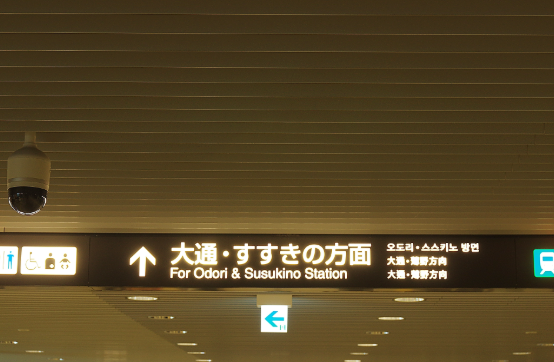
1. The Big Picture: Understanding the 4 Core Underground Zones
Let’s start by loading the overall architecture into your mental cache. Don’t worry—it’s far simpler than it looks. Sapporo’s subterranean space is essentially structured as one long central backbone with branches extending east and west.
[NORTH END] JR Sapporo Station / Subway Sapporo Station
 │
 ▼ Zone 1: APIA Underground Mall & Subway Concourse
 │
 ▼ Zone 2: Chi-Ka-Ho (Sapporo Underground Pedestrian Space: ~520m)
 │
[CENTER] Odori Station (Hub of all 3 Subway Lines)
 ├─ Branch East ─▶ Zone 3: Aurora Town (~310m)
 │         └─ Further East: Underground Art Walkway ▶ Sapporo TV Tower / Bus Center-Mae Station
 │
 ▼ Branch South ──▶ Zone 4: Pole Town (~400m)
 │
[SOUTH END] Subway Susukino Station / COCONO SUSUKINO
The straight-line walking distance from JR Sapporo Station down to the southern terminus at Susukino Station is approximately 1.9 km (1.2 miles). It takes roughly 25 to 30 minutes at a comfortable walking pace, all seamlessly linked via flat, climate-controlled passageways.
The system also branches out horizontally: to the east, it extends past the Sapporo TV Tower all the way to Bus Center-Mae Station on the Tozai Subway Line; to the west, it connects to major commercial high-rises near Nishi-11-Chome.
In other words: nearly every major hotel, tourist destination, shopping complex, and business center in downtown Sapporo is accessible entirely indoors.
2. Characteristics and Highlights of the 4 Main Zones
Because each zone was engineered in different eras for different purposes, their atmospheres and amenities vary significantly. Recognizing these traits will help you orient yourself instantly.
Zone 1: APIA Shopping Mall & JR Sapporo Station Concourse
As soon as you take the escalators down from the JR Sapporo Station ticket barriers, you enter APIA. This bustling shopping center is packed with casual eateries, coffee shops, pharmacies, cosmetics boutiques, and souvenir shops. Walking through APIA southwards directly leads to the gates of Subway Sapporo Station on the Namboku Line.
Zone 2: Chi-Ka-Ho (Sapporo Underground Pedestrian Space)
Connecting Subway Sapporo Station and Odori Station, this premier thoroughfare spans 20 meters in width and roughly 520 meters in length. Opened in 2011, this modern promenade boasts high ceilings, sleek pillars, and plenty of open space.
Both flanks connect directly to modern skyscrapers, offering community event areas, public benches, work tables, and free public Wi-Fi zones.
Zone 3: Aurora Town (East towards Sapporo TV Tower)
Branching eastward from Odori Station toward the Sapporo TV Tower, Aurora Town spans approximately 310 meters. Built in 1971 just ahead of the Sapporo Winter Olympics, it features warm ambient lighting and retro brick-accented shopfronts.
Near its center is the famous “Kotori no Hiroba” (Bird Plaza), a large enclosed glass aviary where live parakeets chirp happily—a beloved meeting spot for locals.
Zone 4: Pole Town (South towards Susukino)
Stretching roughly 400 meters south from Odori Station to Susukino, Pole Town is a vibrant shopping corridor teeming with apparel boutiques, dessert kiosks, and drugstores. The southern terminus links straight into Subway Susukino Station and the basement entrance of the landmark entertainment complex, COCONO SUSUKINO.
3. Never Get Lost: The Algorithm Behind the Exit Numbering System
When you are subterranean, it is easy to lose your sense of orientation: “Am I heading east or west? Which stairway brings me closest to my destination?”
Fortunately, the central corridor—Chi-Ka-Ho—was built with a very elegant, logical exit-numbering rule.
The Chi-Ka-Ho Exit Rule: Odd Numbers East, Even Numbers West!
| Exit Orientation | Numbering Logic | Connected Landmarks & Buildings |
| East Side (Towards TV Tower / Sosei River) | Odd Numbers (1, 3, 5, 7, 9, 11, 13) | Sapporo City Hall, Tokyu Department Store direction |
| West Side (Towards Former Gov. Building / Odori West) | Even Numbers (2, 4, 6, 8, 10, 12, 14) | Akarenga TERRACE, miredo, sitatte sapporo |
Furthermore, the numbers increase sequentially from North (Sapporo Station) to South (Odori):
- Exits 1–4: Closest to Sapporo Station
- Exits 5–8: Mid-point (Kita 3-Jo Plaza, Akarenga TERRACE)
- Exits 9–14: Approaching Odori Station & Odori Park
For instance, if your hotel or meeting is on the west side of town, look for an even-numbered exit. If you are heading towards the TV Tower on the east side, take an odd-numbered exit.
Commit this simple algorithm to memory, and even if your phone’s GPS drifts underground, you will know exactly where you are simply by glancing at the overhead signs.
4. Step-by-Step Walking Route: JR Sapporo Station to Susukino
Here is a real-time walkthrough of navigating from the train platforms all the way to Susukino without a single drop of snow touching your shoulder.
[START] Pass through JR Sapporo Station "West Ticket Gate"
 ↓
Take the escalator down to B1F (APIA Mall)
 ↓
Walk South past the gates of Subway Sapporo Station (Namboku Line)
 ↓
Enter the wide gateway of "Chi-Ka-Ho" and continue straight south (~520m)
 ↓
Reach the Odori Station concourse and head straight into "Pole Town"
 ↓
Stroll south through "Pole Town" (~400m)
 ↓
[GOAL] Arrive at Subway Susukino Station / COCONO SUSUKINO!
Step 1: Descend Underground from JR Sapporo Station
After disembarking at JR Sapporo Station, exit via the West Ticket Gate (Nishi Kaisatsu). Immediately to your left, you will see stairs and an escalator heading down to Basement Level 1 (APIA).
Step 2: Walk Past Subway Sapporo Station
Follow the overhead signs marked “Subway Namboku Line” or “Odori.” Stroll past the restaurants in APIA, and you will see the ticket gates of Subway Sapporo Station. Simply walk past them on either side.
Step 3: Stride Through Chi-Ka-Ho
The ceiling suddenly rises and the space opens up into a wide, luminous avenue. You are now inside Chi-Ka-Ho.
Enjoy the 520-meter flat stroll. Direct entrances to major office and retail towers like Akarenga TERRACE and miredo line the corridor—ideal if you want to stop by a cafe or grab hot snacks at a local convenience store (like Hokkaido’s legendary Seicomart!).
Step 4: Cross the Odori Station Hub
A gentle ramp leads up into the main concourse of Odori Station, where all three subway lines intersect. Check the overhead signs and continue straight toward Pole Town (Susukino direction).
(Tip: Turning left here takes you into Aurora Town toward the TV Tower; turning right takes you toward the west side of the Tozai Line.)
Step 5: Stroll Through Pole Town to Susukino
Follow the pedestrian flow straight down Pole Town. You will pass the basement entrance of “moyuk SAPPORO” (home to the urban aquarium AOAO SAPPORO) on your right. Keep walking, and you will arrive directly at Subway Susukino Station and the entrance of COCONO SUSUKINO!
You have just traversed the core of Sapporo from north to south entirely indoors, insulated from sub-zero temperatures and icy sidewalks.
5. Essential for Remote Workers & Business Travelers: Power Outlets & Wi-Fi Spots
If you are traveling with a laptop and need to catch up on email or take a quick work call, having accessible power outlets and reliable connectivity is crucial. Here are the top work-friendly spots directly connected to the underground walkway:
① Public Wi-Fi: “Sapporo City Wi-Fi”
The city’s official free Wi-Fi network (Sapporo City Wi-Fi) is available throughout Chi-Ka-Ho.
Along the corridor are rest areas (“Ikoi no Hiroba”) equipped with benches and tables where you can quickly reply to messages. Keep in mind these public benches do not have electrical outlets, so keep your battery charged.
② Akarenga TERRACE (Directly Connected to Exits 2 & 4)
One of the most comfortable complexes connected to Chi-Ka-Ho. Cafes on the B1F and 1F levels offer counter seating equipped with power plugs. The building’s multi-story open atrium provides natural light and an airy, peaceful ambiance.
③ miredo (Directly Connected to Exit 4)
A modern commercial complex featuring popular cafe chains like Starbucks. Many bar-counter seats come equipped with dedicated electrical sockets, making it a dependable touchdown station between meetings.
④ sitatte sapporo (Directly Connected to Exit 6)
Famous for its beautiful stepped indoor wooden seating extending from B1F to 2F. The basement features relaxed cafes, perfect for a quick espresso and a 30-minute work sprint.
6. Winter Survival Protocol: How to Dress and What Shoes to Wear Underground
Many first-time winter visitors to Hokkaido fall into two major traps when using the underground network: temperature mismanagement and improper footwear.
Trap ①: The Severe Temperature Gap (Sub-Zero Outdoors vs. 20°C+ Indoors)
While the outdoor temperature in Sapporo regularly drops below -5°C (23°F), the underground network is heavily heated, often staying around 20°C (68°F).
If you bundle up in heavy thermal underwear, thick wool sweaters, and a massive parka, you will start sweating profusely within 5 minutes of walking underground. Once you step back out into the freezing wind, that trapped sweat chills rapidly, drastically increasing your risk of catching a cold.
- The Solution: Dress in modular layers. Wear a front-zip or buttoned coat that can be easily vented or removed the moment you enter the underground mall, and rely on removable accessories like scarves, beanies, and gloves for outdoor warmth.
Trap ②: Never Wear Metal-Spiked Winter Boots on Tiled Floors!
Fearing icy outdoor sidewalks, some tourists purchase winter boots equipped with built-in metal cleats or spikes. However, metal spikes have virtually zero traction on smooth indoor tiles, creating a severe slipping hazard and producing an obnoxious clicking noise with every step.
- The Solution: Opt for winter boots featuring glass-fiber infused rubber outsoles or Vibram Arctic Grip. These advanced compounds grip securely on slick outdoor black ice while remaining completely silent, soft, and slip-free on indoor tile floors.
7. Urban Wellness Hack: Clearing Your Cache with Underground Walking
On a personal note: as an engineer who spends hours debugging code, I regularly use this underground walkway for brisk power walks to reset my mental focus and stay in shape.
A round-trip stroll from JR Sapporo Station to Susukino Station measures approximately 3.8 to 4.0 km (2.4 miles), translating to around 5,000 to 6,000 steps.
- Zero traffic signals (continuous, uninterrupted pace)
- 100% flat and barrier-free (gentle ramps replace stairs)
- Zero exposure to blizzards, freezing sludge, UV rays, or rain
At 170 cm tall, keeping a steady, upright stride allows me to complete the entire round trip in around 40 minutes. Because there are no red lights stopping your rhythm, your smartwatch logs a beautifully consistent aerobic heart rate curve—a fantastic way to clear accumulated mental fatigue after hours behind a screen.
It is not merely a transit corridor; it is an essential public wellness space for local residents.
8. Frequently Asked Questions (FAQ)
Q1: What are the daily operating hours of Chi-Ka-Ho?
A: Chi-Ka-Ho is open daily from 5:45 AM to 12:30 AM (midnight).
You can traverse the space from early morning train departures until the last subway run. Retail shops inside Aurora Town and Pole Town generally operate from 10:00 AM to 8:00 PM, but the pedestrian thoroughfares remain accessible until late at night.
Q2: Can I ride a bicycle or electric scooter through the underground?
A: Riding any wheeled vehicle (bicycles, skateboards, e-scooters) is strictly prohibited.
You may push your bicycle or carry your folded scooter on foot, but be mindful of fellow pedestrians during peak commute hours.
Q3: Where can I find coin lockers for luggage?
A: Extensive coin locker banks are stationed throughout JR Sapporo Station, Odori Station, and Susukino Station concourses.
The largest concentrations are in APIA (near Sapporo Station) and the central mezzanine of Odori Station. Most modern units accept Japanese IC transit cards (Kitaca, Suica, Pasmo) as well as 100-yen coins.
Q4: Is the walkway fully accessible for wheelchairs and heavy strollers?
A: Yes, the entire pathway is 100% barrier-free with ramps and elevator access.
Any elevation changes between Chi-Ka-Ho and the subway concourses feature gentle ramps. If you are rolling heavy luggage, walking underground is vastly safer and smoother than dragging wheels through roadside snowdrifts.
Q5: Should I take the subway or walk from Sapporo Station to Susukino?
A: Choose based on your schedule and luggage weight.
The Namboku Subway Line whisks you from Sapporo Station to Susukino Station in just 3 minutes (fare: 210 yen, approx. $1.40 USD). Walking takes about 25 minutes. If you are exhausted or rushing to a reservation, take the subway; if you want to explore the vibrant shops and enjoy a warm walk, go on foot!
Conclusion: Master Sapporo’s Underground Infrastructure for a Smarter Stay!
Sapporo’s subterranean pedestrian network is far more than an escape from the cold. It represents decades of engineering ingenuity designed to keep urban life flowing smoothly despite sub-arctic blizzards above.
- Walk 1.9 km from JR Sapporo Station to Susukino without stepping outside once
- Remember the exit rule: Odd numbers on the East, Even numbers on the West
- Prevent overheating by dressing in breathable, easily removable layers
- Avoid metal cleats on indoor tiles; stick to hybrid winter soles like Vibram Arctic Grip
Whether you are on a culinary tour of Hokkaido’s ramen and sushi, or visiting for a packed business trip, take full advantage of this underground wonder and enjoy a warm, effortless journey through Sapporo!